UNIST site map
- Admissions
-
Academics
- Colleges and Schools
-
Academic Affairs
- Academic Calendar
- Academic Curriculum
- Requirements for Graduation
- Browse Open Courses
- Undergraduate Administration
-
Graduate Academic Affairs
- Tuition Fee Payment
- Academic Leave of Absence/ Academic Return
- Voluntary Withdrawal/ Expulsion
- Change of Major
- Change of Degree Program/ Dropping of Degree Program
- Class Period/ Attendance Period/ Academic Year・Semester
- Course Registration
- Course Drop
- Attendance/ Grade/ Exam
- Credit Transfer/ Credit Carryover
- Academic Forms
- Education Support
-
Research/Industry
- Research Aims
- Research Findings
- Researcher Search
-
Research Organizations
- UNIST Multi-Interdisciplinary Institute
- IBS Research Groups
-
UNIST Labs
- Department of Mechanical Engineering
- School of Energy and Chemical Engineering
- Department of Civil
- Department of Materials Science and Engineering
- Department of Nuclear Engineering
- Department of Industrial Engineering
- Department of Design
- Department of Biomedical Engineering
- Department of Biological Sciences
- Department of Electrical Engineering
- Department of Computer Science and Engineering
- Department of Mathematical Sciences
- Department of Chemistry
- Department of Physics
- School of Business Administration
- Graduate School of Carbon Neutrality
- Graduate School of Artificial Intelligence
- Research Support
- University-Industry Relations
- Campus Life
- News Center
- About UNIST
-
etc
- UNIST Bulletin
- Work-Life Balance Support System
- UNIST Gender Equality Plan
- Faculty Invitation for Tenure Track
- Faculty Invitation for Non-Tenure Track
- Board Meeting Minutes
- University Council Meeting Minutes
- Administrative Service Charter
- Privacy Policy
- Copyright Policy
- Rejection of Unauthorized Email Collection
- Information Disclosure


Connection Points of Knowledge, Everything About UNIST
Try searching.
Recommended search terms


- Portal
- U Academics Innovation Center
- Leadership Center
- Dormitory
- Academic Information Center
- International Students Support
- Browse Open Courses
- Course Registration
- Graduation Requirements for Graduation
- Academic Leave of Absence/ Academic Return
- Military Service
- Certificate Issuance
- Academic Calendar
- Scholarships
- Campus Map
- Campus Life Guidebook
- Health Care Center
- Human Rights Center
- portal
- UNIST AI Services
- Work-Family Balance Support System
- UNIST Daycare Center
- Sports Center
- UI Downloads
- Announcement
- Recruitment of Professors (Non-tenure)
- Faculty Invitation for Tenure Track
- UNIST Academic Information Center
- Pioneers Innovative Education Team
- Office of Research Facilities and Training
- Office of Research Affairs
- Rule Management System
- Academic Calendar


This is a collection of menus necessary for UNIST students .
students
- Portal
- U Academics Innovation Center
- Leadership Center
- Dormitory
- Academic Information Center
- International Students Support
- Browse Open Courses
- Course Registration
- Graduation Requirements for Graduation
- Academic Leave of Absence/ Academic Return
- Military Service
- Certificate Issuance
- Academic Calendar
- Scholarships
- Campus Map
- Campus Life Guidebook
- Health Care Center
- Human Rights Center


This is a collection of menus necessary for prospective UNIST Students .
prospective Students


This is a collection of menus necessary for UNIST Faculty & Staff .
Faculty & Staff
- portal
- UNIST AI Services
- Work-Family Balance Support System
- UNIST Daycare Center
- Sports Center
- UI Downloads
- Announcement
- Recruitment of Professors (Non-tenure)
- Faculty Invitation for Tenure Track
- UNIST Academic Information Center
- Pioneers Innovative Education Team
- Office of Research Facilities and Training
- Office of Research Affairs
- Rule Management System
- Academic Calendar


NEWS CENTER
Discover not only Research Findings and event news, but also the diverse facets of UNIST presented by reporters and writers.
News Center

UNIST News
When Chemical Intuition Meets Neural Networks: Hybrid AI Algorithm Predicts Metal–Ligand Coordination Structures
Their findings have been published in Angew. Chem. Int. Ed. on February 21, 2026.
- Research
- 관리자
- 2026.04.03
- 90
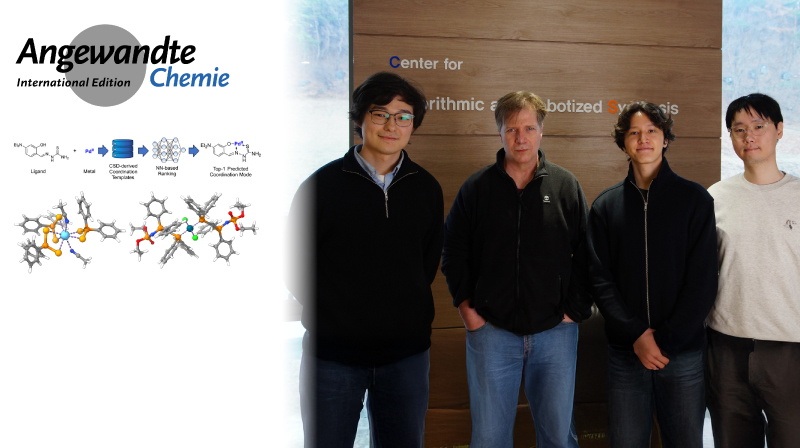
Hemoglobin, which gives blood its red color, the light-emitting materials in smartphone OLED displays, and catalysts used in manufacturing plastics and pharmaceuticals—all share a common feature that is they all involve metal–ligand coordination complexes. In these structures, a central metal ion is surrounded by organic molecules, known as ligands. Now, a novel artificial intelligence (AI) algorithm offers the promise of designing these complex materials more swiftly and accurately, significantly reducing trial-and-error efforts.
Predicting how a metal ion will 'shake hands' with an organic molecule is an inherently complex task, often challenging even for seasoned scientists. This difficulty arises because organic ligands contain multiple potential binding sites, and the number and mode of coordination can vary widely depending on the specific metal and its oxidation state. As a result, dozens or even hundreds of potential structural configurations can exist.
Led by Distinguished Professor Bartosz A. Grzybowski of the Department of Chemistry and Director of the Center for Algorithmic and Robotized Synthesis (CARS) within the Institute for Basic Science (IBS) at UNIST, the research team has addressed this challenge not through increased computational power, but by integrating 'chemical intuition' directly into AI. Published in Angewandte Chemie, their hybrid AI approach moves beyond simple pattern recognition by encoding fundamental chemical principles into neural networks.

Figure 1. An AI-powered hybrid model predicts metal–ligand coordination modes by integrating chemical rules from crystal structures with machine learning, enabling accurate design of complex organometallic structures.
"We have developed a 'hybrid' strategy that combines classical chemical knowledge with machine learning to accurately predict how metals and organic ligands bind," explains Professor Grzybowski. "By analyzing over 100,000 crystal structures from the Cambridge Structural Database, we trained a model that 'understands' the specific behavior of different metals and their oxidation states—something previous models could not achieve."
This innovative technology is poised to become a key component in large-scale computational pipelines. Professor Grzybowski notes, “We expect it to be highly valuable in designing transition metal catalysts used across industries—from pharmaceuticals to advanced functional materials.”
To make this cutting-edge tool accessible worldwide, the team has released RDMetallics, an open-source, Python-based software package, along with a dedicated web portal (coordinate.rdmetallics.net). Researchers anywhere in the world can now predict complex metal–ligand coordination modes directly through their web browsers—no coding skills or expensive hardware required.
Supported by the Institute for Basic Science (IBS), this research was published online on Angewandte Chemie International Edition on February 21, 2026.
Bartosz A. Grzybowski
Distinguished Professor, Department of Chemistry, UNIST
Director, IBS Center for Robotized and Algorithmic Synthesis (CARS)
E: grzybor72@unist.ac.kr
William I. Suh
IBS Public Relations Team
E: willisuh@ibs.re.kr
Story Source
Materials provided by the Institute of Basic Science.
Journal Reference
Galymzhan Moldagulov, Kisung Lee, Sanzhar Nurgaliyev, et al., "Hybrid Computational Strategy for Predicting Complex Ligand–Metal Architectures," Angew. Chem. Int. Ed. (2026). https://doi.org/10.1002/anie.202524655
Related Links
Related Photo



-
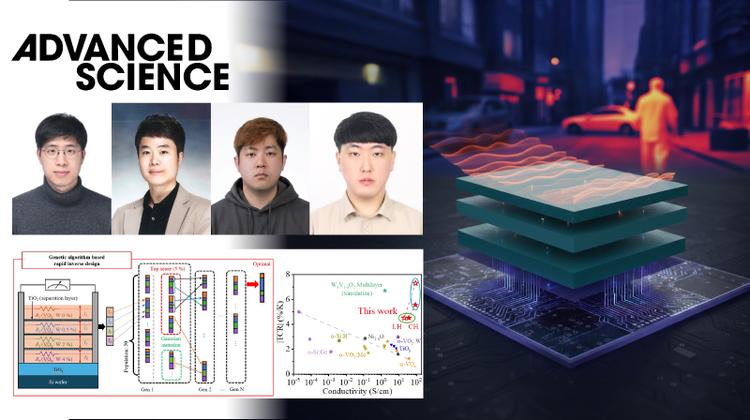
AI-Optimized Vanadium Oxide Multilayers for More Than 20-fold Enhancement in Bolometric Performance
-
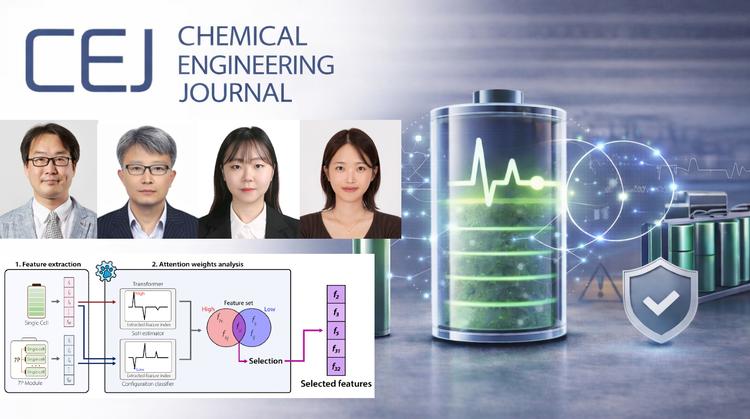
Next-Gen AI Delivers Accurate Battery Diagnostics and Explosion Risk Assessments
-
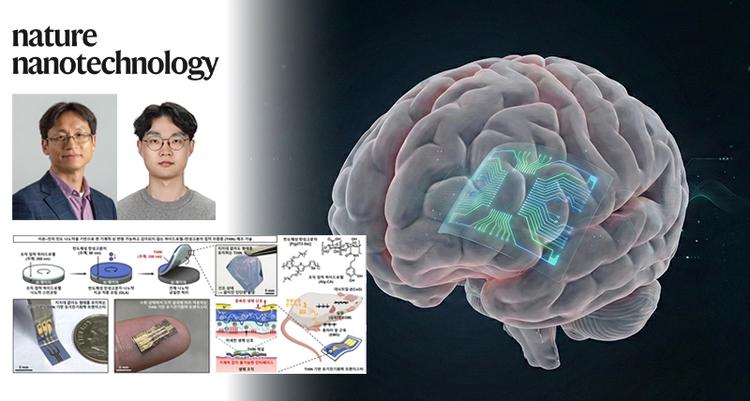
UNIST and SKKU Collaborate on Novel Bioelectronics Device Based on Hydrogel-Elastomer Conductive Nanomembranes
-
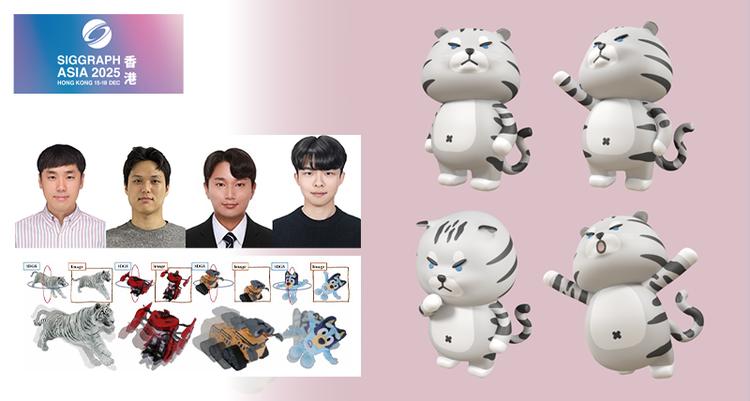
Novel AI Approach for Single-Image-Based 3D Character Animation with Preserved Proportions